At FINANTEQ, we've watched mobile banking change over the past two decades. The pace of change and adoption of new tools is faster than ever. On top of that, the sheer number of solutions and vendors claiming to offer the banking "must-have" is overwhelming.
At FINANTEQ, we've watched mobile banking change over the past two decades.
The pace of change and adoption of new tools is faster than ever. On top of that, the sheer number of solutions and vendors claiming to offer the banking "must-have" is overwhelming.
The challenge: how to meet all customers’ expectations while still optimising costs, streamlining processes, growing revenue, attracting new customers, and retaining existing ones.
Are mobile banking app expectations outpacing delivery?
According to Forrester, 73% of Australian, 68% of UK, and 65% of US banking customers expect to handle every banking task through a mobile app.
Mobile has become the default banking channel. Customers expect instant access, intuitive journeys, value-added services, and the ability to complete tasks without visiting a branch or contacting support.
Are mobile banking app expectations outpacing delivery? According to Forrester's 2025 Digital Experience Review, the answer is yes. Customer expectations continue to rise, while many banks still have significant room to improve their mobile apps and deliver enhancements more quickly. The review evaluated mobile apps across 11 European banks. Even the top-ranked apps only partially meet expectations – Forrester's conclusion states: "all banks have work to do in order to engage with and create value for users."
Matching today's banking challenges with the right solution
Every mobile banking project faces different priorities, from faster delivery and stronger security to AI adoption and regulatory compliance. The table below shows how FINANTEQ's solutions address the most common challenges banks face today.
What's driving mobile banking app development
Below, you can find five things that are changing how banking apps get built.
1. AI usage in mobile banking
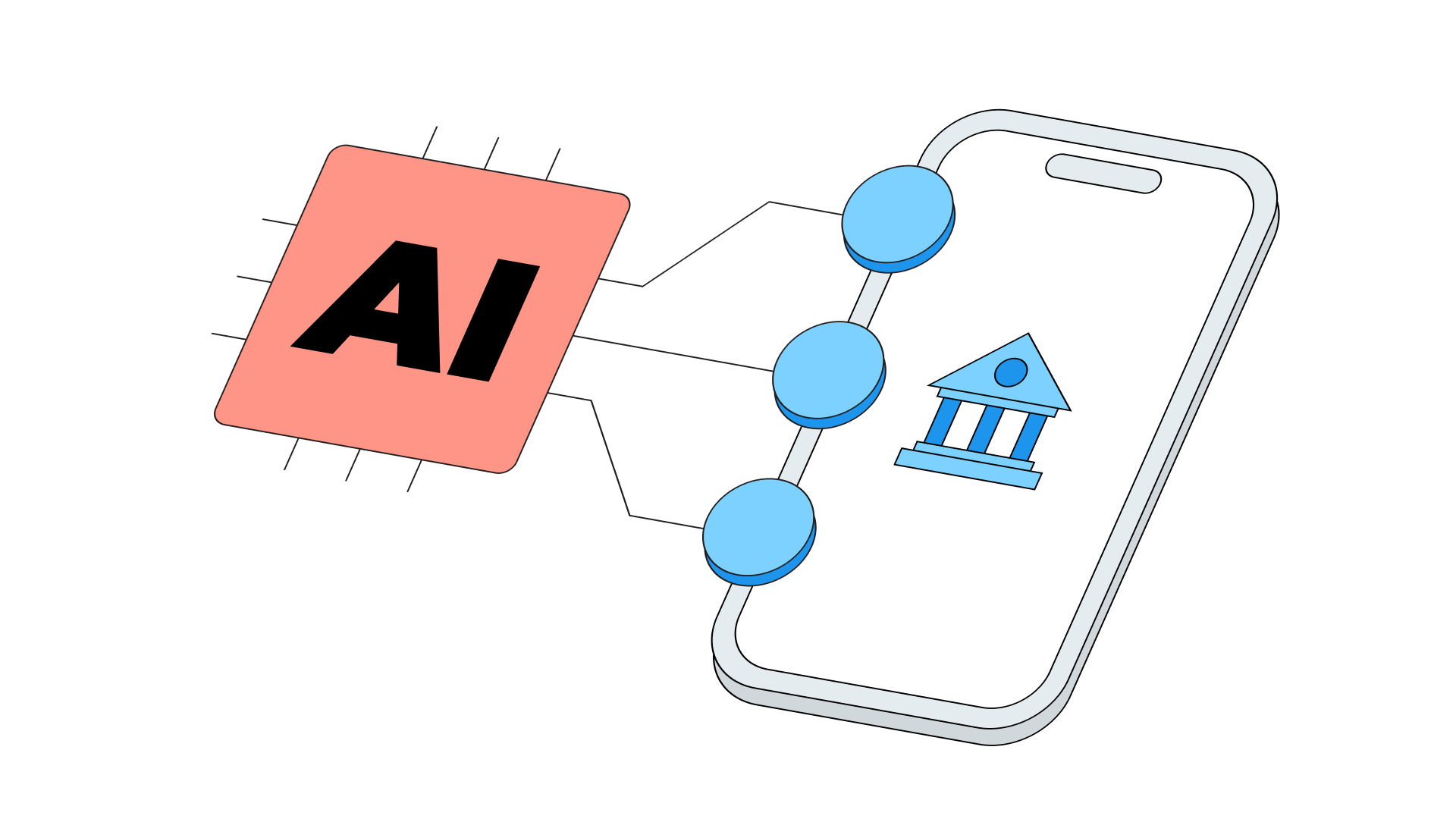
According to a BCG survey, only 25% of institutions have woven AI capabilities into their strategic playbook. The other 75% remain stuck in siloed pilots and proofs of concept.
The banks pulling ahead are wiring AI into credit scoring, transaction categorisation, and personalised financial guidance – not as a layer on top, but as part of the product logic from day one.
For a wider picture of where AI fits into the current fintech landscape, our 2026 trends overview covers why generative AI is becoming infrastructure, not just a feature.
2. Composable architecture is replacing the monolith
The old model – one large, tightly coupled system – breaks under the pace modern banking requires.
Gartner identifies composable technologies as one of the five key trends in core banking. The shift means banks can replace one component without rewriting everything around it.
For development teams, this changes how projects are scoped, how risk is managed, and how fast new features can reach users.
The build-vs-buy question comes up in almost every project. Composable architecture changes the terms of that decision – it's less about choosing one or the other, and more about which components make sense to own and which to integrate. We explored this in our article: Out-of-the-Box or Custom Development Solutions?

3. The super app direction
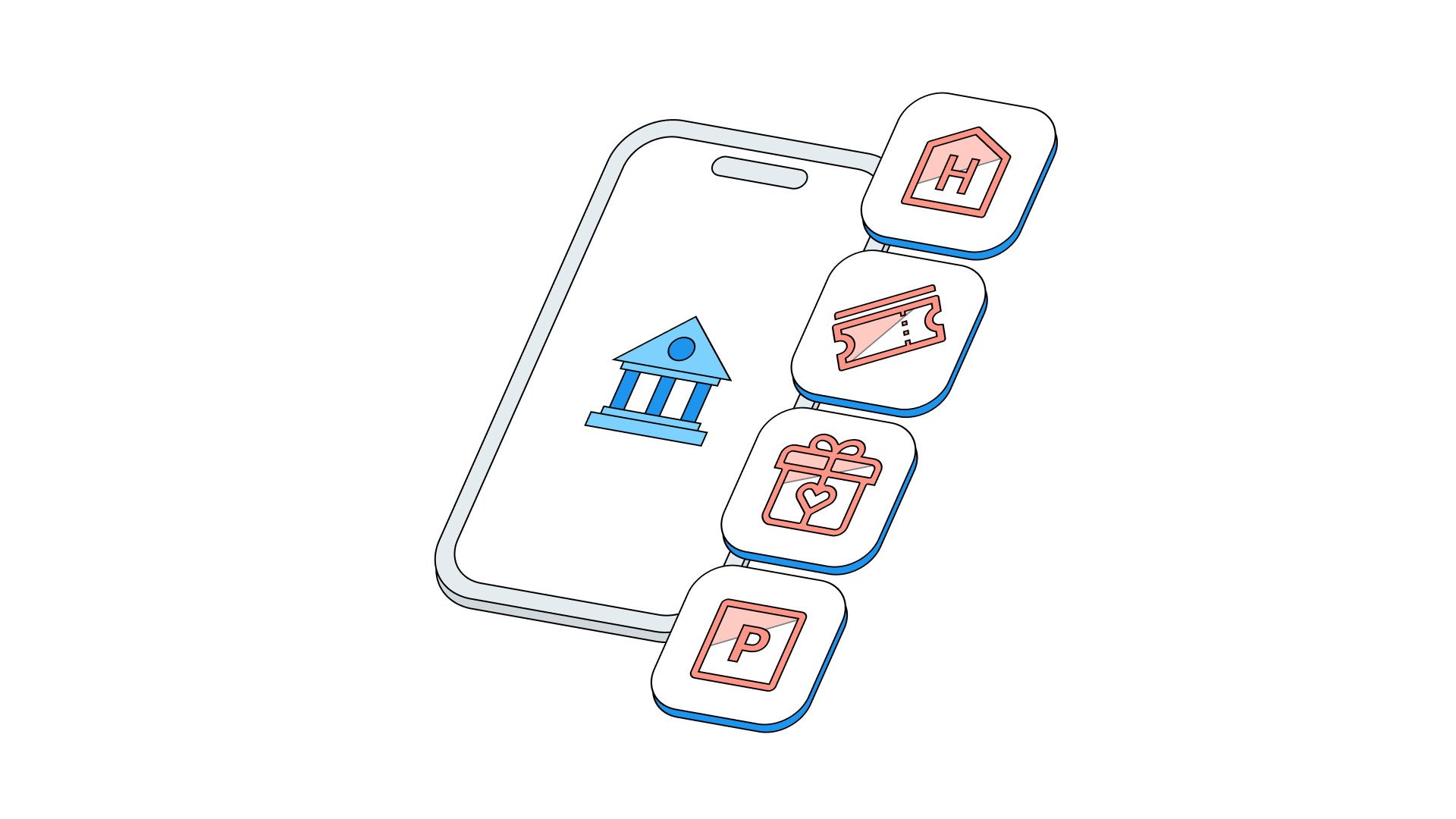
Banks moving in this direction aren't just adding features; they're changing the way they operate. They're rebuilding the product around the idea that the app should be useful outside of traditional banking moments – the way the most-used apps on most phones already are. A good example is embedding lifestyle services directly into the banking app. Based on FINANTEQ's experience, implementing SuperWallet within our clients' mobile banking ecosystems has significantly increased the volume of m-commerce transactions.
4. Embedded finance is normalising
Digging deeper into embedded finance: payments, loans, and insurance are increasingly delivered through non-financial platforms. At the point where customers actually need them, not in a separate banking app.
Forrester identified embedded finance gaining wider acceptance as one of the defining shifts in 2025. For banks, the question is whether they're the infrastructure enabling that or the product being bypassed by it.
5. The channel is wider than the phone
Smartwatches, voice assistants, and connected devices are already part of how a growing share of users check balances, receive alerts, and initiate payments. Building a mobile banking app today that only works on a phone means rebuilding it again when the next channel matters.
Banks that design for multiple touchpoints today will be better positioned to adapt to whatever comes next.

The biggest challenges in mobile banking app development
Knowing where mobile banking projects get stuck is the first step to avoiding these problems.
Legacy integration is still the most common blocker
Accenture's research puts it plainly: years of underinvestment have left most banks with growing tech debt and systems that resist integration with AI, open APIs, and modern mobile architectures. 63% of the top 100 banks are either migrating or planning to migrate their core banking to the cloud. We've written separately about what that migration actually involves – it's rarely just a technical decision.
When a modern mobile frontend communicates with a 20-year-old backend via a fragile middleware layer, the project timeline is the first thing to go. Then the budget. Then, usually, the original scope.
Mobile banking security is never "finished"
Cybersecurity remains the biggest risk facing banks. According to EY, 82% of European banking Chief Risk Officers rank it as their top business risk, while KPMG reports that 89% of banks are increasing cybersecurity budgets and 75% have seen cyberattacks rise over the past year.
The challenge is that mobile threats evolve faster than release cycles. New malware, runtime attacks, and AI-powered fraud techniques continue to emerge long after an application goes live. That's why protecting a banking app shouldn't be treated as a one-time security review but as an ongoing capability. Solutions such as Promon's in-app protection can be integrated into existing mobile banking applications at any stage, helping banks strengthen security without redesigning the entire app.
Release cycles that slow everything down
In most banks, getting a change into production takes weeks – sometimes months. Teams batch everything into large releases, which means longer feedback loops, bigger risk per release, and slower response when something goes wrong.
At FINANTEQ, automating regression testing brought the cycle down from several weeks to under 20 minutes. With one manual tester for seven to ten developers, the team ships faster without sacrificing quality.
How long does mobile banking app development take? At FINANTEQ, we ensure fast time-to-market in mobile banking app development, with teams ready to start a project almost immediately. Our agile mobile development approach, experienced teams, and ready-to-use components accelerate delivery. Check out our development approach.
What regulations apply to mobile banking app development?
Four regulatory frameworks shape almost every decision in mobile banking app development in Europe right now. Here's a quick overview of what each regulation covers and why it matters.
PSD2 and Strong Customer Authentication
PSD2's Strong Customer Authentication requirement is now the baseline for payment transactions across Europe. Getting SCA right – in a way that doesn't introduce friction that kills conversion – is still one of the harder UX and security problems in mobile banking app development. Choosing a technology partner with proven regulatory expertise can significantly reduce implementation risk and ongoing compliance efforts.
PSD3 and the Payment Services Regulation
A provisional political agreement on PSD3 was reached in November 2025, with formal adoption expected in 2026. Full compliance is anticipated by late 2027. PSD3 imposes tighter requirements on fraud liability, transaction monitoring, and open banking APIs – applied directly across the EU without national transposition. Apps being built now will launch into a PSD3 world. Building on PSD2 assumptions alone is building on a regulation that's being replaced.
DORA
The Digital Operational Resilience Act came into force in January 2025. It applies not just to banks but to the technology providers that serve them. For banks evaluating development partners, DORA compliance is no longer optional due diligence. It's a contractual requirement.
ISO 20022
The migration to ISO 20022 for SEPA was completed in November 2025, and the SWIFT migration was completed in the same timeframe. Any banking app handling payments needs to be built on an infrastructure that speaks this standard. Apps built on older integrations will increasingly see this as a problem.
The underlying principle
Regulations typically lag behind technological change. Discovering a structural compliance gap six months into a build is not a paperwork problem. It's a project restart.
Mobile banking app development: key takeaways
Mobile banking is now the primary banking channel, not a secondary one.
Banks need to design apps that continuously evolve to keep up with customer expectations, emerging technologies, and regulatory changes.
Speed has become a competitive advantage.
Composable architecture, agile delivery, and reusable components enable banks to launch new features faster while reducing project risk.
Security and compliance are continuous responsibilities.
Cybersecurity threats and regulations evolve throughout an application's lifecycle, making ongoing protection and regulatory readiness essential.
Customers expect more than banking.
AI, embedded finance, and lifestyle services are redefining what users expect from a banking app and creating new opportunities for engagement.
Success depends on making the right technology decisions.
Successful mobile banking app development is not about building every feature in-house. It's about choosing the right architecture, components, and technology partners to deliver value faster.
At FINANTEQ, we build mobile banking software for banks across Europe and beyond, including mBank, Erste Bank Polska, BNP Paribas, and National Bank of Kuwait.
Not sure where your app stands today? A quality audit is often the clearest first step.